The North Korean nuclear test: A perilous path back to the negotiating table
By Jeffrey Goldstein | May 26, 2009
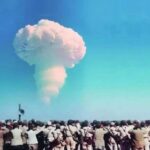
North Korea’s nuclear test is an escalation of Pyongyang’s familiar tactic. When it feels it is being ignored, North Korea often seeks to focus attention on itself by behaving provocatively. This tactic has been successful in the past. For example, when Pyongyang threatened to withdraw from the Nuclear Non-Proliferation Treaty in 1993, it brought the Clinton administration to the negotiating table. Similarly, Pyongyang’s first nuclear test in 2006 resulted in the Bush administration taking the Six-Party Talks much more seriously. The question now is whether North Korea’s current behavior will force the Obama administration to come to the table for serious negotiations, or if this most recent nuclear test has forced the international community to take a united position against North Korea.
It’s clear that North Korea has been low on the Obama administration’s agenda. To be fair, the president has a tremendous list of international problems to deal with–from the global economic crisis to the wars in Afghanistan and Iraq to the Iranian nuclear issue. As such, most of President Barack Obama’s initial overseas travel has been to Europe, where he is returning in early summer. And while Secretary of State Hillary Clinton made her first overseas trip to East Asia in February, her agenda was focused more on economics and climate change than on security issues or Pyongyang’s nuclear capabilities. The fact that the new U.S. special envoy for North Korea was appointed to work on a part-time basis only reinforces where Pyongyang fell on the administration’s list of priorities.
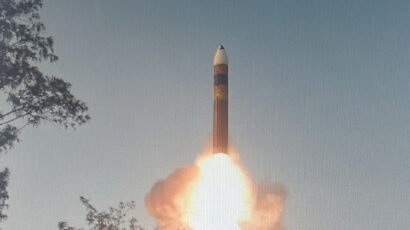
Thus, perhaps having learned from the long delay that ensued when the new George W. Bush administration announced a Korean policy review that produced interminable wrangling within the U.S. government, Pyongyang quickly has ratcheted up the pressure on the Obama administration by threatening to restart its nuclear program, launching a long-range missile, and now exploding a nuclear device.
Clearly, Pyongyang is trying to force Obama to engage on North Korea’s timetable and to focus on the issues that are most important to Pyongyang (namely, ensuring regime survival) rather than those that are most important to Washington (namely, denuclearization).
By conducting a second nuclear test, North Korea is making the point that, because it’s acting as an established nuclear power, the United States needs to give up its focus on putting the North Korean nuclear genie back in its bottle and instead must learn to live with a nuclear North Korea. Possibly spurred by the uncertainty following Kim Jung Il’s reported stroke last year, Pyongyang’s decision makers appear to have agreed that drastic action designed to bring the United States to the negotiating table on North Korea’s terms is worth an adverse reaction from China and the toughening of the Obama administration’s initial negotiating position.
The North Korean leadership must be aware that its most recent nuclear test will cause a backlash in Tokyo, Seoul, and Beijing. The South Korean and Japanese reactions are important because they could limit Washington’s room to maneuver. Beijing’s reaction is even more important, as China is the only country that has the ability to turn the screws on North Korea by restricting trade or cutting back assistance. To date, however, China has been unwilling to take a tough stance with Pyongyang, almost certainly because of the tremendous political and economic impact North Korean regime collapse would have on China.
How is Washington likely to react in the face of these circumstances? As we have already seen, the initial focus–a la previous North Korean provocations–was on the U.N. Security Council and the question of sanctions. But unless this latest test has shocked Beijing sufficiently to produce a radical change in its approach to North Korea, the Security Council is unlikely to produce serious sanctions. Looking beyond the United Nations, Washington is already involved in serious consultations with Seoul and Tokyo on next steps. Given the already parlous state of relations between the two Koreas and between Japan and Pyongyang, neither of these U.S. allies is likely to be in the mood for making concessions after this most recent provocation. In fact, additional unilateral sanctions, particularly by Tokyo, are a real possibility.
Although the Obama administration seeks multilateral action, it also faces a choice regarding its bilateral response. It can decide that North Korea’s escalating provocations are sufficiently dangerous enough that they require Washington to offer negotiations–bilaterally or under the guise of multilateral talks–on Pyongyang’s most important priorities: a peace treaty or other political accommodation, trade, and energy. Or it can conclude that the new test doesn’t change the situation much except for slightly reducing Pyongyang’s already small stockpile of nuclear weapons. Those who support the latter view are likely to argue that the Obama administration inherited a North Korea that went nuclear on the Bush administration’s watch, which makes it unlikely that the new administration can win Pyongyang’s agreement to denuclearize and reduce the domestic political price it would pay for failing to do so. This may be an important consideration for an administration under attack for being soft on national security.
The Obama administration would prefer a multilateral solution, but regional allies may not be willing to negotiate with North Korea. With this and everything else on Obama’s plate, it remains unclear whether Pyongyang will succeed in bringing Washington back to the table and, if it does, whether the United States will be willing to give priority to the issues that are most important to North Korea.
Together, we make the world safer.
The Bulletin elevates expert voices above the noise. But as an independent nonprofit organization, our operations depend on the support of readers like you. Help us continue to deliver quality journalism that holds leaders accountable. Your support of our work at any level is important. In return, we promise our coverage will be understandable, influential, vigilant, solution-oriented, and fair-minded. Together we can make a difference.
Topics: Nuclear Weapons, Opinion
Get alerts about this thread
0 Comments

Jeffrey Goldstein
Goldstein served as the State Department's desk officer for North Korea from 1994 to 1996. In this capacity, he participated in U.S.-North Korean... Read More